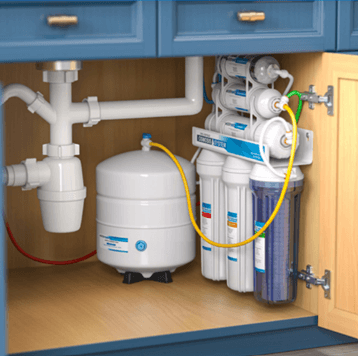
What to Do About PFAS in Water
Understanding the Problem
What are PFAS?
Per- and polyfluoroalkyl substances (PFAS) are often added to products because of their nonstick, water repellent, and stain resistant properties. Their production and manufacturing, as well as agricultural and consumer product use, results in PFAS in our environment.
What kind of filters remove PFAS?
If PFAS are found in your drinking water, there are common water filters that do a good job of removing them. Make sure to use a filter that is certified to remove PFAS by a trusted source like NSF International, the International Association of Plumbing and Mechanical Officials (IAMPO), or the Water Quality Association (WQA).
How do I find a certified filter?
Look on the product packaging or in specifications online (“performance data sheet” in the owner’s manual or installation guide) for the certification information. Make sure it specifically says it removes PFOA and PFOS and that it has one of these three certifications:
- NSF P473
- NSF/ANSI 53 (for activated carbon filters)
- NSF/ANSI 58 (for reverse osmosis filters)
Read on for two examples of certified products.
Recommended Filters
Activated Carbon Block Filter
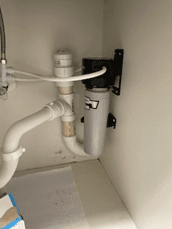
Reverse Osmosis Filter